steel-building-warranty-guarantee-comparison

Steel Building Warranty and Guarantee Comparison: Coverage & Cost
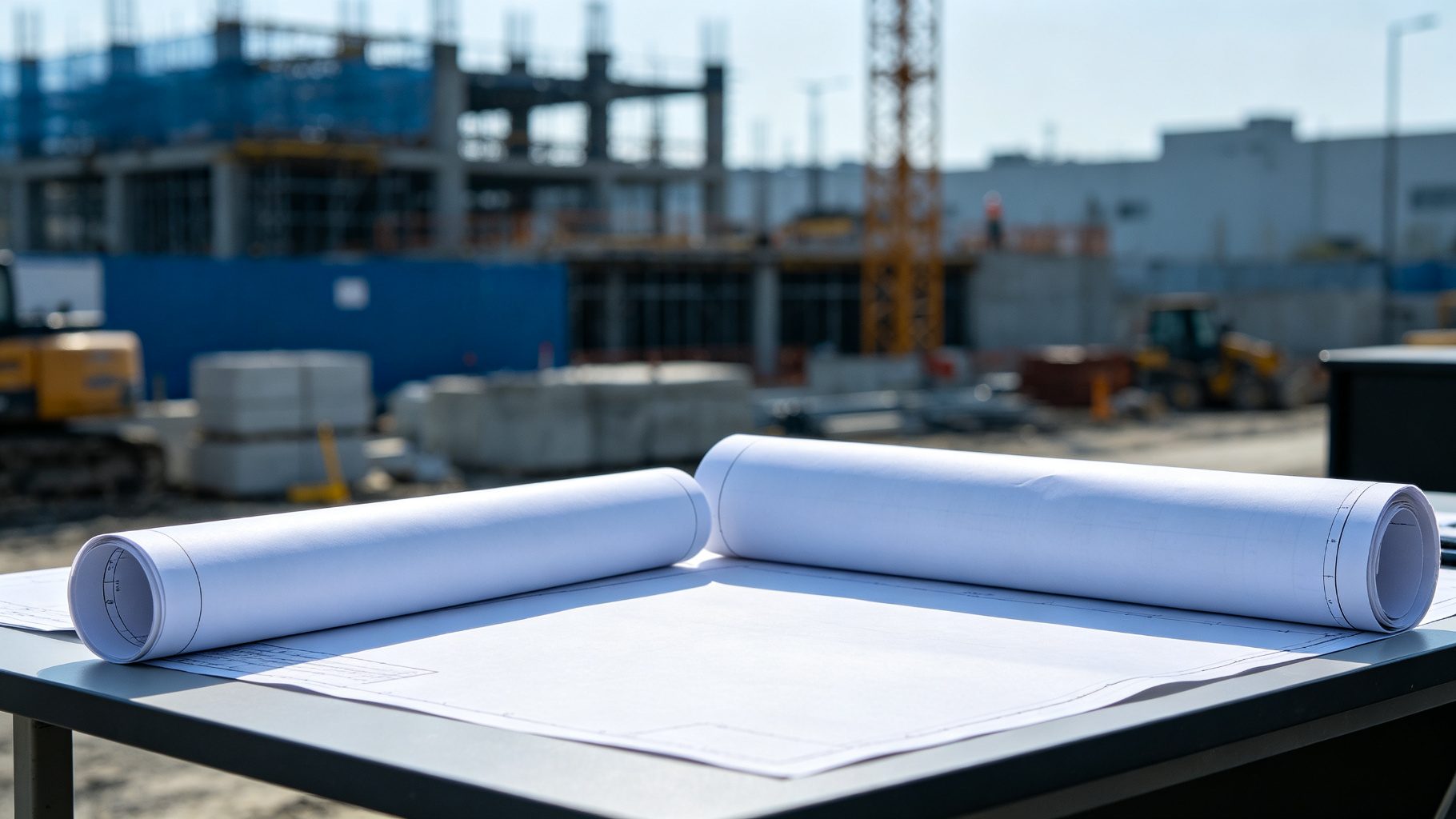
 A bound warranty document and rolled steel structural blueprints lying on an engineering desk, steel tape measure and engineering pencil beside them, blurred steel workshop interior in the background.
A performance bond protects your payment. A manufacturer warranty protects the building itself. When you compare steel building suppliers, the warranty terms tell you more about long-term risk than the price tag does. A steel building warranty guarantee comparison reveals three critical differences: what is covered, for how long, and what actually happens when you file a claim.
This article separates the terminology, lays out the layers of coverage (structural, material, workmanship, roof), compares typical durations and exclusions, explains the extended-warranty and transferability trade-offs, and walks through the claim process. Our steel building performance bond advance payment guarantee covers bank guarantees and payment security; this article covers what the manufacturer promises to repair or replace on the building itself. Quality-claim mechanics are detailed in steel building quality claim and warranty claims.
Warranty vs Guarantee: What's the Difference?
In everyday steel-building sales talk, "warranty" and "guarantee" are used almost interchangeably, and a supplier who says "we guarantee our product" rarely means anything distinct. But the two words carry different legal weight, and a buyer doing a serious steel building warranty guarantee comparison should insist on knowing which one is on the page.
A warranty is a contractual promise, written into the sales agreement, to repair or replace defective materials or workmanship within a defined period, subject to stated conditions and exclusions. It is a clause you can point to, with a scope and a term. A guarantee is a broader assurance, often phrased as an outcome—"no roof leaks for 10 years" or "the frame will stand for 20 years"—and may be backed by a separate financial instrument or by the manufacturer's own balance sheet. In the United States, the federal Magnuson-Moss Warranty Act governs how written warranties must be disclosed, and international contract practice (for example FIDIC forms) sets out warranty and defect-notification periods. The practical takeaway is the same: do not rely on the word used; read the clause.
Coverage typically arrives in four layers. A structural warranty covers the primary frame—columns, beams, bracing—against collapse, and runs the longest. A material warranty covers the steel panels, coatings, and fasteners. A workmanship warranty covers installation defects and is usually short. A roof warranty covers the roofing system, gutters, and sealants against leaks. The four layers are priced and timed differently, and the strongest-looking headline number usually refers only to the structural layer. Contract terms are examined in steel building contract review.
Steel Building Warranty Coverage Layers
| Layer | What It Covers | Typical Duration | Cost Range (USD) | Notes |
|---|---|---|---|---|
| Structural frame | Columns, beams, bracing against collapse | 10–50 years | Included in price | Longest coverage |
| Material | Steel panels, coatings, fasteners | 1–10 years | Included / upgrade | Varies by supplier |
| Workmanship | Erection and installation defects | 1–2 years | Included | Shortest, most detailed |
| Roof system | Panels, gutters, sealants, leaks | 1–5 years | Included / upgrade | Often pro-rated |
| Extended package | Materials + roof extended | 10–20 years | 1–3% of contract | Optional add-on |
Coverage layers are stacked; the headline "20-year warranty" usually refers only to the structural frame.
Typical Warranty Duration & Coverage Scope
Once you separate the layers, the next step in a steel building warranty guarantee comparison is to set a realistic expectation for each component. The primary steel frame (commonly Q355B or A572 Grade 50) carries a structural warranty of 10–50 years, framed as "not against collapse" rather than "maintenance-free." The roof and wall panels, color-coated steel, typically carry a 1–5 year warranty against coating peeling and leaks. Sandwich panels carry 2–5 years for core integrity. Fasteners and bolts carry 1–2 years against loosening or corrosion fracture. Doors and windows carry 1–2 years for normal operation. Insulation carries 1–3 years against sagging or delamination.
The exclusions matter as much as the coverage, because they define what the warranty does not cover. Standard exclusions include: misuse, overloading, or unapproved modification; natural disasters beyond the design loads (an earthquake, hurricane, or flood that exceeds the code event the building was designed for); failure to follow the maintenance manual; damage caused by third-party installation or alteration; and ordinary wear and tear. A roof warranty will typically exclude leaks caused by blocked gutters or foot traffic, and a structural warranty will exclude a frame that has been overloaded with stored materials. Insurance—what covers events outside warranty—is discussed in steel building insurance, and the maintenance schedule that keeps a warranty alive in steel structure corrosion maintenance schedule.
Typical Warranty Duration by Building Component
| Component | Standard Warranty | Extended Warranty | Exclusions | Notes |
|---|---|---|---|---|
| Structural steel frame | 10–50 years | Same | Overload, beyond-design events | Anti-collapse |
| Roof / wall panels | 1–5 years | 10–20 years | Blocked drains, foot traffic | Often pro-rated |
| Sandwich panels | 2–5 years | 10 years | Impact, chemical attack | Core integrity |
| Fasteners & bolts | 1–2 years | 5 years | Overtorque, corrosion outside design | Re-torque required |
| Doors & windows | 1–2 years | 5 years | Misuse, glass breakage | Operation only |
| Insulation | 1–3 years | 5 years | Moisture, settlement | No sag |
Extended warranties usually cover materials only; confirm whether labor and shipping are included.
Extended Warranty & Transferability
The standard package from most manufacturers is roughly one to two years on workmanship, five years on materials, and ten to twenty years on structure. An extended warranty pushes the material and roof coverage out to ten or twenty years. Its cost is usually quoted as a percentage of the contract value—commonly 1–3%. On a USD 1.5 million building, that is USD 15,000 to USD 45,000.
Whether the extension is worth it depends on two questions. First, how long will you own the building? A warehouse held for thirty years benefits more than a short-term lease. Second, what exactly does the extension cover? Many extended warranties cover only replacement materials and exclude the labor to install them, the shipping to the site, and any business interruption during repair. A roof extension that pays for a new panel but leaves you to pay the crane crew and the lost production is far less valuable than one that covers labor. Read the line items, not the headline.
Transferability is the second feature to compare, and a steel building warranty guarantee comparison is incomplete without it. Some warranties "run with the land"—they transfer automatically to a new owner when the building is sold. Others are tied to the original purchaser and die on resale. For a commercial real estate transaction, a transferable structural warranty is a tangible asset: the buyer gets the remaining term of coverage, which supports both the asset's value and its insurability. Retention and final-payment logic that ties to warranty release is in steel building retention money final payment, and the documents handed over at completion in steel building project handover documentation.
Comparing Warranty Terms Across Multiple Steel Building Suppliers?
We put our warranty coverage in writing: structural frame 20 years, materials 5 years, workmanship 2 years. No hidden exclusions, no fine-print loopholes. Request our sample warranty document and compare it line by line.
Claim Process: How to File & What to Expect
The single most under-rated part of a steel building warranty guarantee comparison is the claim process. A 20-year warranty you cannot successfully use is worth less than a 5-year warranty that pays out without a fight. The standard process runs five steps.
First, on discovering a defect, give the manufacturer written notice—email plus registered mail—with photos, video, and a description of the problem. Most contracts require notice within 30 days of discovery; delayed notice is a common reason claims are rejected. Second, the manufacturer schedules a site inspection, typically within 10–30 days. Third, the inspector issues a written determination: in warranty, out of warranty, or partial. Fourth, an in-warranty claim moves to repair or replacement, with the manufacturer specifying the method and the timing. Fifth, disputes are resolved through the arbitration or litigation clause already in the contract. From notice to completed repair, expect roughly 30–90 days for a straightforward claim.
Claims fail for predictable reasons: the owner skipped the maintenance manual (did not re-torque bolts, did not clear gutters), the building was loaded beyond design, an unapproved modification was made, or notice was given late. A site acceptance inspection at handover—covered in steel building site acceptance inspection—is the best way to lock in the condition the warranty assumes. When a claim turns into a dispute, the resolution path is in steel construction dispute resolution.
Warranty Claim Timeline & Cost Reference
| Stage | Typical Duration (days) | Owner Action | Manufacturer Action | Est. Cost Impact (USD) |
|---|---|---|---|---|
| Notice & evidence | 0–7 | Send written notice + photos | Acknowledge receipt | 0 |
| Site inspection | 10–30 | Provide site access | Inspect, document | 0–500 (owner) |
| Determination | 7–14 | Review determination | Issue written finding | 0 |
| Repair / replace | 30–90 | Coordinate access | Repair or replace parts | 0 (in warranty) |
| Dispute (if any) | 60–180 | Engage counsel / arbiter | Defend or settle | 5,000–50,000+ |
Timelines are typical; repair costs fall on the manufacturer only for in-warranty defects, and exclusions can shift them back to the owner.
Reading the Fine Print: Clauses to Scrutinize
The last step in a serious steel building warranty guarantee comparison is the fine print. Six clauses decide whether the warranty is real or illusory. Does the warranty require the use of original manufacturer spare parts? Who pays for labor—many warranties cover only materials and leave the crew on your invoice? Who pays shipping of replacement panels? Who covers the temporary buildings, lost production, or business interruption while the repair happens? Does the warranty require periodic professional inspection reports to stay valid? And how broadly is force majeure defined—does it quietly exclude the very wind, snow, and flood events you care about?
The comparison strategy is simple. Ask every supplier for the standard written warranty document, not a verbal assurance. Then compare line by line: coverage scope, duration, exclusions, claim process, and transferability. Prefer a shorter warranty with a clean, fast claim process over a long warranty that funnels every claim into arbitration. The same line-by-line discipline applies to bids—see steel building tender evaluation bid comparison—and to the technical specification that defines what is actually covered in steel structure technical specification.
Case Example
A South American buyer procured a 5,200 m² (56,000 sq ft) pre-engineered steel distribution building at 12 m (40 ft) clear span. Three suppliers quoted near-identical prices but very different warranty documents: one covered only the frame, another promised "no leaks for 10 years" verbally with no paper. We insisted on written samples and compared line by line. The chosen terms—structural frame 20 years, materials 5 years, workmanship 2 years, with labor and shipping included in roof claims—won over a cheaper material-only extended option that excluded crew and crane costs. Six months later a panel defect was paid in 45 days including labor, and the transferable structural clause added value when the property changed hands. The claim mechanics are in steel building quality claim and warranty claims.
Conclusion
A steel building warranty guarantee comparison comes down to three layers and three questions. The layers are structural frame, materials, and workmanship (plus roof); the questions are what is covered, for how long, and what happens when you file a claim. The exclusions are the biggest trap—overload, unapproved modification, missed maintenance, and beyond-design events are almost always out of scope. Always demand the written warranty document, not a verbal promise, and weight the claim process more heavily than the headline duration. Tell us you want a line-by-line comparison, and we will send our sample warranty so you can stack it against your other bids.
Warranty Terms You Can Read, Understand, and Enforce.
We provide a written warranty sample with every quote—structural frame 20 years, materials 5 years, workmanship 2 years. No hidden exclusions. Compare it against your other bids line by line.
🏭 Explore: Steel Workshop · Steel Warehouse
About the Author
Senior Structural Engineer
With over 20 years of hands-on experience in steel structure design and prefabricated building engineering, our in-house senior structural engineer has personally contributed to more than 500 steel building projects—including warehouses, industrial factories, aircraft hangars, agricultural buildings, and commercial structures. The focus is on translating design codes such as AISC 360, ASCE 7, and Eurocode 3 into buildable, cost-effective steel solutions that balance structural performance, fabrication efficiency, and total project cost.
Learn more about our engineering team
Frequently Asked Questions
Q: What does a typical steel building warranty cover?
A: A standard steel building warranty typically covers three layers: structural frame (10–50 years against collapse), materials (1–5 years for steel panels and coatings), and workmanship (1–2 years for installation defects). Exclusions usually include misuse, overload, natural disasters beyond design loads, and damage from third-party modifications.
Q: What is the difference between a warranty and a guarantee?
A: A warranty is a contractual promise to repair or replace defective materials or workmanship within a defined period. A guarantee is a broader assurance, often covering an outcome like "no roof leaks for 10 years." In practice the terms are mixed in supplier documents, so always read the specific clauses rather than relying on the label.
Q: How much does an extended steel building warranty cost?
A: Extended warranty coverage typically costs 1–3% of the total building contract value. On a USD 1.5 million building, that ranges from USD 15,000 to USD 45,000. It usually extends material and roof coverage from 5 years to 10–20 years, but confirm whether labor and shipping are included.
Q: Can a steel building warranty be transferred when I sell the property?
A: It depends on the supplier. Some warranties are transferable and run with the building; others are tied to the original purchaser only. For commercial real estate transactions, a transferable structural warranty adds tangible value to the sale. Always check the transfer clause before signing.
Q: What is the most common reason a warranty claim is rejected?
A: Late notice is a leading reason, but the most common is failure to follow the maintenance manual—for example, not re-torquing bolts or not clearing gutters. Claims are also rejected for overloading, unapproved modifications, and damage from events beyond the design loads.
Reference Links
- FIDIC Contract Forms — international engineering contract standards for warranty, defect notification, and claim procedures.
- FTC / Magnuson-Moss Warranty Act — U.S. federal rules governing how written consumer warranties must be disclosed.
steel-building-code-compliance-permitting-process
steel-building-asset-management-lifecycle-cost