Steel Building Energy Audit & Net-Zero Retrofit: Baseline & Payback

Steel Building Energy Audit & Net-Zero Retrofit: Baseline & Payback

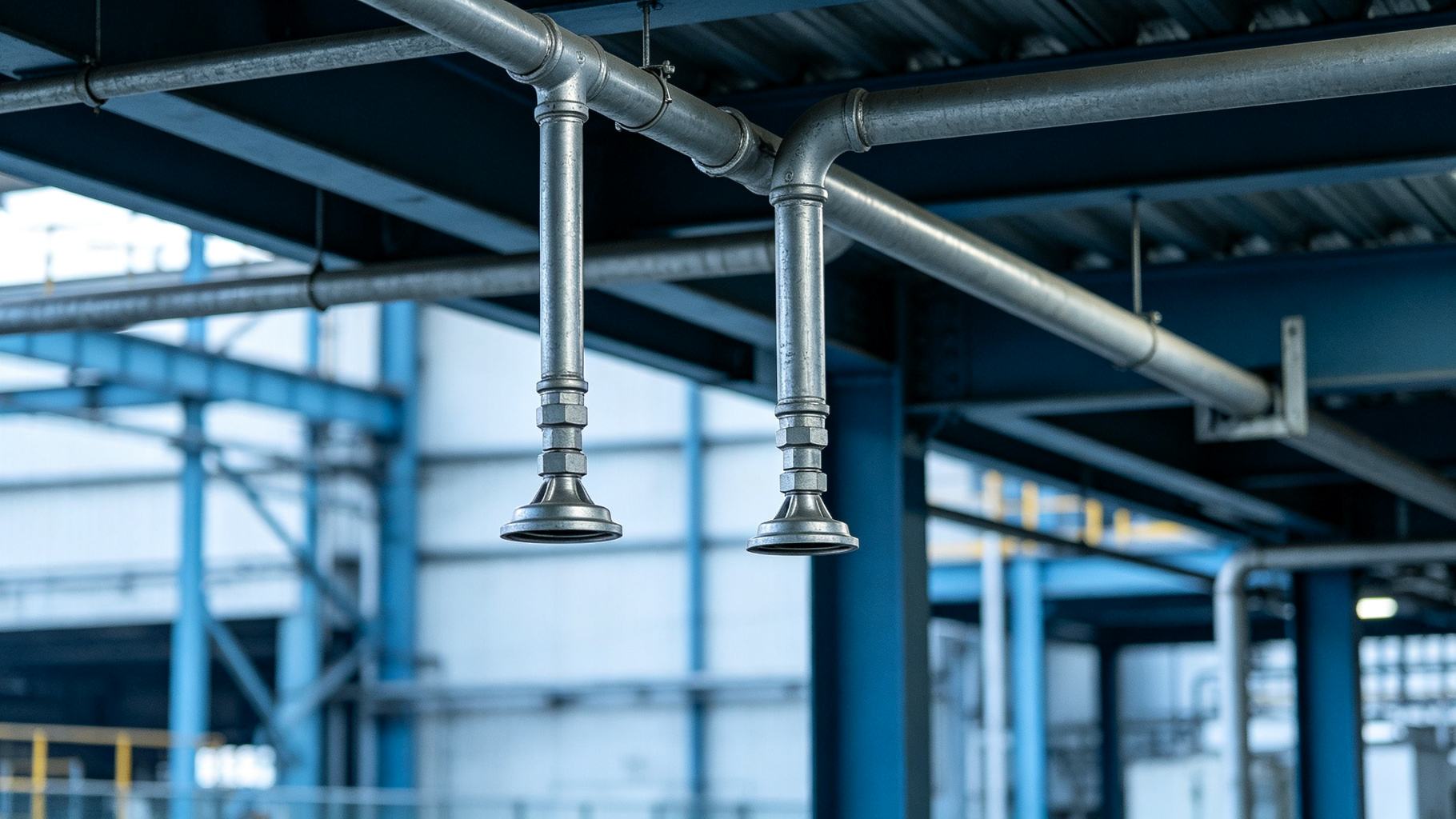
Engineer using a thermal imaging camera on a steel-framed roof, laptop and power meter on the floor, daylight streaming through skylights.
Your steel warehouse uses 12 kWh per square meter per month. Is that good? Bad? The question is unanswerable until you build an energy baseline. Without a baseline, every energy-saving upgrade is a guess—and most owners discover three years too late that they retrofitted the wrong system. A steel building energy audit net zero retrofit program starts by measuring what you actually consume, ranks upgrades by payback, and maps a multi-year path to net-zero aligned with your 2040 or 2050 targets. This guide covers the baseline method, the ASHRAE audit levels, the net-zero retrofit pathway, and ROI calculation. Our energy efficiency upgrade article lists specific measures (LEDs, insulation, HVAC). This one shows how to audit first and rank them before you spend a dollar.
Establishing the Energy Baseline
No retrofit decision should be made without an energy baseline, because without it you cannot prove the retrofit worked. The baseline is the last twelve months of complete utility data, normalized for production output and weather, expressed in energy per unit area.
Gather twelve consecutive months of data: electricity bills (kWh), gas bills (m³ or therms), steam records if used, and production records (tonnes shipped, units produced). Normalize the result: divide energy by floor area and adjust for degree-days and production volume so a quiet month cannot distort the picture. The standard units are kWh/m²/yr or kBtu/ft²/yr. Compare your figure against peers in EPA ENERGY STAR Portfolio Manager—if you are below the median, your next dollar goes to operations discipline, not capex; if you are above, the audit will find fat to cut.
Typical baselines for steel buildings:
- Warehouse and storage: 80–150 kWh/m²/yr (8–14 kBtu/ft²/yr), dominated by lighting and ventilation.
- Factory and production hall: 200–400 kWh/m²/yr (19–37 kBtu/ft²/yr), including process equipment.
- Office annex attached to steel buildings: 150–250 kWh/m²/yr (14–23 kBtu/ft²/yr).
For a structured, repeatable version of this process, ISO 50001 defines an Energy Management System (EnMS): Plan–Do–Check–Act cycles, an energy review, an energy baseline (EnB), and energy performance indicators (EnPIs). Even if you do not certify, following the five-step method prevents the baseline from becoming a one-off exercise. Table 1 shows benchmark ranges, the first dashboard a steel building energy audit net zero retrofit program publishes. For the specific measures you will later rank, see steel building energy efficiency upgrade; for envelope design, read steel building insulation thermal design; for the wider green context, see sustainable steel building green construction.
Table 1: Steel Building Energy Baseline Benchmark
| Building Type | kWh/m²/yr | kBtu/ft²/yr | Primary Load | Notes |
|---|---|---|---|---|
| Warehouse / cold storage annex | 80–150 | 8–14 | Lighting, ventilation | Low process load |
| Factory / production hall | 200–400 | 19–37 | Process equipment + HVAC | Highly variable by process |
| Office annex | 150–250 | 14–23 | HVAC, lighting, IT | Comparable to commercial office |
| Workshop / maintenance bay | 120–220 | 11–20 | Ventilation, welders, tools | Intermittent load |
Compare normalized annual use against these ranges. A figure 30% above the median signals audit-worthy waste.
Audit Methodology: ASHRAE Levels I–III
Not every audit needs a $50,000 engineering study. ASHRAE defines three audit levels, and picking the right one is the second half of the steel building energy audit net zero retrofit decision.
Level I — Walk-through Analysis. One to two days on site. An auditor visually identifies obvious waste: over-lit aisles, HVAC running at night, missing insulation at eaves, damp felt. The output is a low- and no-cost measure list. Cost: $500–$2,000. Suitable for small buildings or first screening.
Level II — Energy Survey and Analysis. Two to four weeks. The auditor collects twelve months of bills, inventories equipment (lighting fixtures, HVAC units, compressors), breaks energy use into end uses—lighting, heating, ventilation, process—and models simple retrofit economics. The output ranks measures by simple payback. Cost: $3,000–$15,000. This is the right level for the vast majority of mid-size steel warehouses and factories.
Level III — Investment-Grade Audit. Submetering for seven to thirty days, a full building energy model (eQuest, OpenStudio), and engineered designs with detailed financial modeling. Cost: $15,000–$50,000+. Justified only for multi-building campuses or projects chasing net-zero certification.
Steel buildings have three audit hotspots that generic auditors miss: thermal bridging at purlins penetrating the roof insulation; high-bay lighting in clear-height warehouses where LED replacement alone cuts 30–50% of lighting energy; and compressed air leaks, which routinely waste 20–30% of compressor energy in fabrication shops. Table 2 compares the three levels. For daylight strategies that reduce lighting load, see steel building daylighting; for carbon accounting, read steel carbon footprint ESG; for roof-only upgrades, see steel roof refurbishment.
Table 2: ASHRAE Audit Level Comparison
| Level | Duration | What It Covers | Typical Cost (USD) | Best For |
|---|---|---|---|---|
| I Walk-through | 1–2 days | Visual waste spotting | $500–$2,000 | Small buildings, first screening |
| II Survey & Analysis | 2–4 weeks | Bill analysis, equipment inventory, payback ranking | $3,000–$15,000 | Most steel warehouses and factories |
| III Investment-grade | 1–3 months | Submetering, energy model, engineered design | $15,000–$50,000+ | Campus / net-zero target projects |
Start at Level II. Only escalate to Level III when the retrofit budget exceeds $200k and financing depends on audited numbers.
Net-Zero Retrofit Pathway
Net-zero for an existing steel building is reached in three phases: cut the load, generate on-site, buy green for the remainder.
Envelope upgrade. Add 50–100 mm (2–4 in) of rock wool or glass wool to the roof, reaching R-30 to R-40. Treat the cold bridges: purlin thermal break pads stop steel channels from short-circuiting the insulation. Walls get insulated sandwich panels internally or external cladding. Specify glazing with U-value below 2.0 W/m²K and seal the openings.
On-site renewables. Steel roofs are ideal for BIPV roof integration: replace selected standing-seam panels with building-integrated photovoltaic modules, or mount racked panels on the purlins. Add solar carports or ground-mounted arrays on unused land. Replace gas boilers with air- or ground-source heat pumps, and pair PV with a battery energy storage system (BESS) to shave peak demand.
Electrification and controls. Switch high-bay lighting to LED with daylight and occupancy sensors. Connect HVAC to a building automation system (BAS) that zones, schedules, and night-shuts. Repair compressed air leaks and convert to variable-speed compressors.
That LED swap is the fastest-payback measure in the whole retrofit queue, and our LED high-bay replacement and panel upkeep guide zooms in on the fixture-level economics—$80–$200 per installed high bay, 40–60% lighting-energy reduction, 2–4 year payback—plus the annual electrical panel torque and five-year thermographic scan that keep the power side safe.
The phasing matters: Year 1–2 delivers no-regret measures (LED, controls, leak repairs) with paybacks under three years. Year 3–5 funds envelope and BIPV from those savings. Year 6–10 adds heat pumps, storage, and 100% renewable electricity procurement. Table 3 summarizes the phased savings that define the net-zero retrofit roadmap. For the BIPV detail, see steel BIPV roof integration; for wall work, read steel building wall cladding refurbishment; for whether the frame has life left, see steel building remaining service life.
Table 3: Net-Zero Retrofit Phasing & Estimated Savings
| Phase | Measures | Est. Investment (USD/m²) | Energy Savings (%) | Simple Payback (yr) |
|---|---|---|---|---|
| 1 (Year 1–2) | LED + controls, air leak repairs, compressed air tune-up | $15–$35 | 15–25 | 1–3 |
| 2 (Year 3–5) | Roof/wall insulation, cold-bridge treatment | $40–$80 | 10–20 (additional) | 5–8 |
| 3 (Year 3–6) | BIPV rooftop solar sized to load | $80–$150 | Offset 40–70 of remaining | 6–10 |
| 4 (Year 6–10) | Heat pump electrification, BESS, green PPAs | $30–$70 | Decarbonizes heating | 8–12 |
Savings stack. A building through all four phases typically reaches net-zero operational energy in 8–10 years.
Not Sure Where Your Steel Building Is Losing Energy?
We run Level II energy surveys, establish your baseline in kWh/m²/yr, and rank retrofits by simple payback—then design BIPV-ready roof framing so you can add solar later without reinforcing.
ROI & Payback Analysis
This energy audit program lives or dies by its numbers. Use simple payback first: investment divided by annual energy savings. Typical benchmarks: LED relamping 1–3 years; roof insulation addition 5–8 years; BIPV solar 6–10 years with incentives. Always escalate future energy prices—over a ten-year horizon, a 3% annual price rise materially improves payback.
Look beyond simple payback to lifecycle cost: retrofit investment against 30 years of operating savings. Internalize carbon costs where a carbon tax or ETS exists, and check whether green loans or sustainability-linked financing lower your interest rate by 25–50 basis points for certified EnMS buildings.
Upfront carbon from the steel itself—30–50% of lifetime emissions in an efficient building—also belongs in that lifecycle math. Our lower-carbon steel and EPD reporting guide shows how to compare cradle-to-gate GWP across mills and specify EAF steel where it makes sense, closing the gap between operational savings and whole-building carbon.
Three structural caveats apply to steel building energy audit net zero retrofit programs on existing frames. First, BIPV loads roughly 15–25 kg/m² (3–5 psf)—verify purlin capacity before you commit, or design reinforcement into the re-roof. Second, roof retrofits usually involve old panel removal, new insulation, and new panels. Third, heavy plant—heat pumps, cooling towers—needs roof-load and seismic checks. For financial methods, see steel building ROI analysis; for ongoing cost ownership, read steel building maintenance TCO; for structural upgrades that may be needed first, see steel building seismic retrofit. Energy audit ROI justifies upgrading equipment; once the new RTUs are in, a preventive maintenance contract keeps efficiency from drifting 15–20% within three years—read our rooftop unit preventive maintenance schedule for the quarterly filter, semi-annual coil, and annual compressor check cycle that protects the energy audit gains.
Conclusion
A steel building energy audit net zero retrofit program is a sequence, not a shopping list: measure your baseline in kWh/m²/yr, run an ASHRAE Level II audit, rank measures by simple payback, and reach net-zero by cutting first and offsetting second. Steel roofs are structurally ideal for BIPV because purlins can be reinforced at design or re-roof stage—skipping that reservation means paying twice. A retrofit chosen without a baseline is a guess; a baseline without a phased plan is just a report.
About the Author
Senior Structural Engineer
With over 20 years of hands-on experience in steel structure design and prefabricated building engineering, our in-house senior structural engineer has personally contributed to more than 500 steel building projects—including warehouses, industrial factories, aircraft hangars, agricultural buildings, and commercial structures. The focus is on translating design codes such as AISC 360, ASCE 7, and Eurocode 3 into buildable, cost-effective steel solutions that balance structural performance, fabrication efficiency, and total project cost.
Learn more about our engineering team
Case Example
A 3,800 m² (40,900 sq ft) steel-framed warehouse in Denver, Colorado was audited after five years showing energy use at 165 kWh/m²/yr (15.4 kBtu/ft²/yr)—35% above the warehouse peer median. An ASHRAE Level II survey identified three major waste streams: over-lit high-bay fixtures consuming 45% of total load, missing roof insulation at R-15, and uninsulated purlin thermal bridges. The phased retrofit began with LED high-bay replacement with occupancy sensors, cutting lighting energy by 52% and paying back in 2.3 years. Phase two added 75 mm (3 in) of rock wool roof insulation reaching R-38 with purlin thermal break pads. Phase three installed 210 kW of rooftop BIPV, sized after verifying purlin capacity for the 20 kg/m² (4.1 psf) PV load. After four years, normalized energy dropped to 92 kWh/m²/yr—approaching the warehouse median—with PV offsetting 45% of remaining consumption. For BIPV structural integration, see steel BIPV roof integration.
Measure First. Retrofit Second. Reach Net-Zero Third.
We establish your energy baseline, run a Level II audit, and design BIPV-ready roof framing—so solar drops in without structural reinforcement. Start with a scoping call.
🏭 Explore: Steel Factory · Steel Workshop
Frequently Asked Questions
Q1: What is a good energy baseline for a steel warehouse?
A typical steel warehouse uses 80–150 kWh/m²/yr (8–14 kBtu/ft²/yr), mostly from lighting and ventilation. A factory runs higher at 200–400 kWh/m²/yr (19–37 kBtu/ft²/yr) because of process equipment. Compare your normalized bill against these ranges using EPA ENERGY STAR Portfolio Manager; if you are 30% above median, an audit will pay for itself quickly.
Q2: What are the ASHRAE energy audit levels?
Level I (Walk-through): 1–2 days, low-cost measure list, $500–$2,000. Level II (Survey): 2–4 weeks, bill analysis plus equipment inventory plus simple payback ranking, $3,000–$15,000. Level III (Investment-grade): submetering plus energy modeling plus detailed engineering, $15,000–$50,000+. Most steel buildings need Level II.
Q3: Can a steel building achieve net-zero energy?
Yes—via a three-step pathway: (1) cut energy use 20–40% with LEDs, controls, and insulation; (2) install BIPV rooftop solar sized to offset the remaining load; (3) buy renewable electricity through a green PPA for the gap. Steel roofs are ideal for BIPV because purlins can be reinforced at design stage.
Q4: How long is the payback on energy retrofits?
LED lighting: 1–3 years. Roof insulation addition: 5–8 years. BIPV rooftop solar: 6–10 years (with local incentives). Prioritize short-payback measures first, then use those savings to fund the longer ones—a self-financing retrofit queue.
Q5: Do we need ISO 50001 certification to start?
No. You can adopt the ISO 50001 method—energy review, baseline, EnPI targets, PDCA cycle—without formal certification. Certification becomes valuable when customers, regulators, or green-finance lenders require it, typically at multi-site portfolios or companies selling into EU or Japanese markets. Start measuring; certify later when the data justifies it.
Reference Links
- ISO 50001 Energy Management Systems — International standard for establishing, implementing, maintaining, and improving an energy management system, including energy baseline and EnPI requirements.
- ASHRAE Energy Audit Protocol — American Society of Heating, Refrigerating and Air-Conditioning Engineers, source of the three-level energy audit framework (Walk-through, Survey, Investment-grade) widely adopted in North American practice.
Steel Building Re-Roofing: Removal, New Panels & Sequence
Steel Building Performance Bond vs Advance Payment Guarantee: Coverage & Cost