steel-anaerobic-digestion-biogas-plant

Steel Anaerobic Digestion Biogas Plant: Digester Tanks & Gas Holders

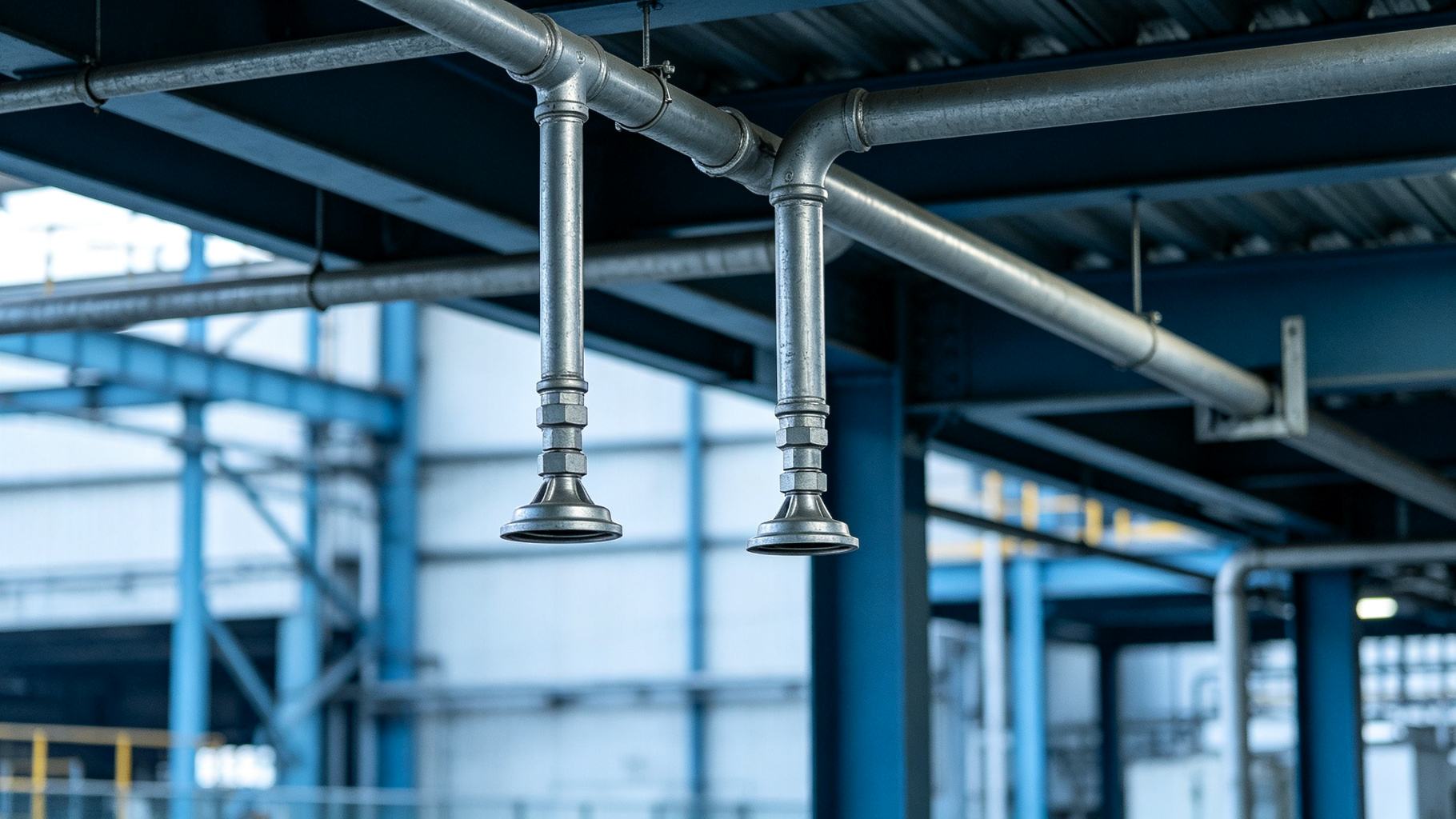
Evening view of a biogas plant: three silver cylindrical digester tanks on concrete pads, a white floating-roof gas holder beside them, steel-truss pipe racks linking units, and a grey CHP engine building under a blue-grey sky.
A waste-to-energy plant burns garbage at 1,000 °C and drives a steam turbine. An anaerobic digestion plant quietly ferments organic matter at 35–55 °C inside sealed tanks, then collects the biogas—roughly 60% CH₄ and 40% CO₂—and burns it in a CHP engine. The heat source is biology, not flame. A steel anaerobic digestion biogas plant is engineered around three demands: heavy digester tank loads on settled foundations, gas holder structures with moving seals, and H₂S corrosion protection on every exposed surface. This guide covers the structural differences versus incineration, digester and foundation loads, gas holders and gas trains, CHP and feed handling, H₂S protection, and cost phasing. If you want the combustion baseline first, read steel waste to energy plant.
Why Steel Fits an Anaerobic Digestion Plant
A steel anaerobic digestion biogas plant shares almost nothing with a waste-to-energy building. Our incineration article describes boilers at 1,000 °C, refractory linings, and flue-gas cleaning trains. An AD plant ferments organic slurry at mesophilic 35 °C (95 °F) or thermophilic 55 °C (131 °F), stores the gas, and runs a gas engine. The steel scope is topside walkways, mixer supports, pipe racks, and a CHP building—not a fireproof boiler house.
Agricultural AD plants typically run 1–5 MWe; municipal sludge plants run 5–20 MWe. Column spacing of 9–12 m (30–40 ft) accommodates digester tanks 15–25 m (50–82 ft) in diameter. The site splits into receiving hall, digester battery, gas holder, desulfurization/dehydration skids, CHP engine room, and control room. Adjacent scopes worth reading include steel chemical plant building for corrosive-area detailing and steel building foundation for heavy-tank pad design.
Digester Tanks & Foundation Loads
The dominant load in a steel anaerobic digestion biogas plant is the digester itself. A typical mesophilic digester holds 2,000–8,000 m³ (530,000–2,110,000 gal) of slurry and weighs 2,000–8,000 t (4.4–17.6 million lb) when full. Base pressure lands at 35–55 kN/m² (730–1,150 psf)—a uniform load that drives the foundation design. Ring beams or full raft foundations are used, and differential settlement is limited to 1/500 of tank diameter to keep the floating seal watertight.
Topside steel does real work here. Mixers, recirculation pumps, and tank heaters mount on tank-top platforms or side brackets; their reactions transfer to steel framing around the tank rim. Feed pumps and screw conveyors weigh 2,000–5,000 kg (4,400–11,000 lb) each and sit on independent supports. Digestate dewatering halls carry 15–25 kN/m² (310–520 psf) floors. Settlement and load-path issues are covered in steel building foundation settlement correction and steel structure load combination.
| Tank Type | Volume (m³ / gal) | Full Weight (t / lb) | Base Pressure (kN/m² / psf) | Foundation Type |
|---|---|---|---|---|
| Mesophilic agricultural | 2,000–4,000 / 530k–1.06M | 2,000–4,000 / 4.4M–8.8M | 35–45 / 730–940 | Ring beam / raft |
| Mesophilic municipal | 4,000–8,000 / 1.06M–2.11M | 4,000–8,000 / 8.8M–17.6M | 45–55 / 940–1,150 | Full raft |
| Thermophilic post-digester | 1,500–3,000 / 400k–790k | 1,500–3,000 / 3.3M–6.6M | 30–40 / 630–840 | Ring beam |
| Buffer storage | 1,000–2,000 / 260k–530k | 1,000–2,000 / 2.2M–4.4M | 25–35 / 520–730 | Ring beam |
Biogas Holder & Gas Train
Raw biogas runs 55–65% methane, 35–45% CO₂, 0.1–3% H₂S, and water vapor. The gas holder is the most distinctive steel element. Wet-type (floating) gas holders store 1,000–5,000 m³ (35,000–177,000 ft³) of gas; the steel piston rises and falls in a water seal on vertical guides. Dry-type membrane holders use a double membrane (outer PE/PVC, inner gastight) inflated by the gas itself. In either case, the support steel must carry both vertical loads from the moving roof and horizontal guide reactions, and must follow the roof through its full stroke without binding.
The gas train treats the gas before the engine. Biological or iron-oxide desulfurization towers weigh 10,000–20,000 kg (22,000–44,000 lb) and sit on independent steel skids. Condensate separators and gas heaters run along the pipe rack. All of this steel lives in an H₂S-laden atmosphere, so coating and material choices follow steel structure corrosion protection; the pipe rack also needs a full lightning path per steel structure lightning protection.
| Unit | Capacity (m³ / ft³) | Weight (kg / lb) | Material | Corrosion Rating |
|---|---|---|---|---|
| Wet gas holder | 1,000–5,000 / 35k–177k | 15,000–40,000 / 33k–88k | Steel, epoxy tar | C5-M |
| Dry membrane holder | 2,000–6,000 / 70k–212k | 8,000–20,000 / 17.6k–44k | Membrane + steel ring | C4 |
| Desulfurization tower | 50–100 / 1,770–3,530 | 10,000–20,000 / 22k–44k | 316L SS / FRP | C5-M |
| Condensate separator | 5–10 / 177–353 | 500–1,500 / 1,100–3,300 | 316L SS | C5-M |
Building an AD Plant That Holds Digester Weight, H₂S Atmosphere & Gas Holder Motion?
We size digester tank foundations for full-liquid loads, detail H₂S-rated steel throughout the gas train, and design gas holder support structures that follow the floating roof. Tell us your feedstock tonnage and target CHP capacity.
CHP Engine Room & Desulfurization
The CHP engine room is the heaviest building in the plant. Gas reciprocating engines or turbines run 1–5 MWe per unit and weigh 15,000–40,000 kg (33,000–88,000 lb) each. Each engine sits on an independent equipment pad with vibration-isolation mounts. Exhaust runs up through roof trusses, and heat-recovery boilers or heat exchangers add another 5,000–10,000 kg (11,000–22,000 lb).
Because biogas is 55–65% methane with an explosive range of 5–15% by volume, the CHP room and desulfurization area are classified Zone 2. Explosion-vented roof panels, combustible-gas detectors interlocked with ventilation, and minimum 12 air changes per hour of accident ventilation are required. Feed receiving hoppers and sorting equipment weigh 5,000–15,000 kg (11,000–33,000 lb) on separate pads. Detailing follows steel structure blast resistant design and steel building fire protection design.
| Equipment | Power (MWe) | Weight (kg / lb) | Hazard Zone | Notes |
|---|---|---|---|---|
| Gas reciprocating engine | 1–2 | 15,000–25,000 / 33k–55k | Zone 2 | Vibration-isolated pad |
| Gas turbine (large) | 3–5 | 25,000–40,000 / 55k–88k | Zone 2 | Exhaust heat recovery |
| Heat-recovery boiler | — | 5,000–10,000 / 11k–22k | Zone 2 | Roof penetration |
| Feed receiving hopper | — | 5,000–15,000 / 11k–33k | Non-hazardous | Separate foundation |
H₂S Corrosion Control in Biogas Atmosphere
H₂S is the enemy of carbon steel in a biogas plant. In moist gas it forms sulfurous acid (H₂SO₃), and carbon steel corrosion rates can reach 0.5–2 mm/year (20–80 mils/year). Gas holder interiors, piping, and columns near desulfurization units use 316L stainless steel or high-performance coatings. Exposed outdoor steel uses epoxy zinc-rich primer plus epoxy coal-tar polyurethane, DFT ≥ 320 µm—an ISO 12944 C5-M level.
Leak safety runs parallel to corrosion control. Methane at 5–15% volume is explosive, so roof relief panels and gas detectors are mandatory. Under-insulation corrosion is also a known failure mode on hot exhaust and biogas piping; see steel structure corrosion under insulation and steel structure corrosion maintenance schedule.
Operator access matters for the long-term maintenance of a biogas plant. Digester tops need 1.2 m (4 ft) wide maintenance walkways with guardrails, and mixer removal slots must be reserved in the roof geometry. Pipe racks should be spaced so that a desulfurization tower can be lifted out for media replacement without dismantling adjacent piping. These details look minor in the steel model but drive maintenance cost over a 20-year operating life. Coatings should be touch-up rated at every field-bolted connection, because the bolt holes are the first place the H₂S atmosphere finds the base steel.
Cost Overview & Phasing
Steel frame alone for an AD complex runs $300–500/m² ($28–$46/sq ft) FOB. Adding H₂S-rated coating and explosion venting pushes the kit to $500–750/m² ($46–$70/sq ft). Turnkey structural scope—digester foundations, CHP pads, gas holder supports—comes in at roughly $2,000–3,500 per kW installed; the digester tanks and CHP engines themselves are separately supplied.
Phasing is standard. Phase 1 is a single demonstration digester; Phase 2 adds three to four tanks and the CHP; Phase 3 expands feedstock handling and gas treatment. Reserve extra bays and biogas pipe flanges at steel stage. The EPA's biogas opportunities program publishes market and policy context (see Reference Links). Sustainability and carbon-credit framing follow sustainable steel building green construction and steel building carbon footprint esg.
For project planning, remember that a steel anaerobic digestion biogas plant is more about civil works and tank supply than about steel tonnage. The steel scope is topside—walkways, mixer supports, pipe racks, the CHP shell—and typically accounts for 15–25% of total project cost. Feedstock characterization (moisture, volatile solids, contaminants) drives digester sizing and must be locked before foundation loading is finalized. Schedule-wise, digester tanks have long lead times (20–30 weeks), so order them in parallel with steel fabrication rather than after the frame is up.
Frequently Asked Questions
Q1: What foundation load does an anaerobic digester tank impose?
A typical 2,000–8,000 m³ (530,000–2,110,000 gal) digester weighs 2,000–8,000 t (4.4–17.6 million lb) when full, exerting 35–55 kN/m² (730–1,150 psf) at the tank base. Differential settlement must be limited to 1/500 of tank diameter to prevent seal failure.
Q2: How corrosive is biogas to steel?
Raw biogas contains 0.1–3% H₂S by volume, which forms sulfurous acid in moist conditions and can corrode carbon steel at 0.5–2 mm/year (20–80 mils/year). Steel in the gas train and near desulfurization units should use 316L stainless steel or C5-M-rated coating (DFT ≥ 320 µm).
Q3: Does a biogas plant need explosion protection?
Yes. Biogas is 55–65% methane, with an explosive range of 5–15% by volume. The CHP engine room and desulfurization area are classified Zone 2, requiring explosion-vented roof panels, gas detectors linked to ventilation, and minimum 12 ACH accident ventilation.
Q4: How much does a steel anaerobic digestion plant cost?
Steel frame alone runs $300–500/m² ($28–$46/sq ft) FOB; a kit with H₂S corrosion protection and explosion venting is $500–750/m² ($46–$70/sq ft); turnkey structural scope lands at $2,000–3,500/kW installed. The digester tanks and CHP engines themselves are additional.
Q5: Can a biogas plant be expanded later?
Yes. Most plants phase from one demonstration digester to a three- to four-tank battery plus CHP. Reserve extra bays, biogas pipe flanges, and electrical capacity at the steel stage so later tanks tie in without interrupting the operating battery.
Case Example
An agricultural biogas plant shows how the steel scope follows the biology. The complex comprised three 3,500 m³ (925,000 gal) digesters and a 1.2 MWe CHP, with about 95 t of topside walkway, mixer, and pipe-rack steel, in an anonymized central European rural site. Full digester weight applied about 45 kN/m² (940 psf) at the base, and the gas atmosphere carried corrosive H₂S. We used raft foundations held to a 1/500 differential-settlement limit, C5-M coating at 320 µm DFT, and 316L stainless steel through the gas train. Over the first 18 months, measured differential settlement stayed under 8 mm, no corrosion incidents were recorded, and the floating gas holder tracked its full stroke without binding. The combustion alternative is contrasted in steel waste to energy plant; hidden piping corrosion is in steel structure corrosion under insulation.
Conclusion
A steel anaerobic digestion biogas plant is three structural problems stacked together: heavy digester tanks on foundations sized for 35–55 kN/m² (730–1,150 psf), gas holder supports that track a moving floating roof, and C5-M-rated steel that survives H₂S-laden biogas. Freeze the digester foundation settlement limits at design stage and do not downgrade the H₂S coating later.
Digester Weight, H₂S Corrosion, Gas Holder Motion—One Steel Frame Handles All.
We design biogas plants tank by tank: digester foundations sized for full-liquid loads, H₂S-rated steel through the gas train, and gas holder support structures that track the floating roof. Tell us your feedstock tonnage and target CHP output.
🏭 Explore: Steel Factory · Steel Warehouse
Reference Links
- ASABE—American Society of Agricultural and Biological Engineers — engineering standards for agricultural anaerobic digestion and on-farm biogas systems.
- EPA Biogas Opportunities — U.S. EPA biogas market data, policy context, and feedstock resource programs.
About the Author
Senior Structural Engineer
With over 20 years of hands-on experience in steel structure design and prefabricated building engineering, our in-house senior structural engineer has personally contributed to more than 500 steel building projects—including warehouses, industrial factories, aircraft hangars, agricultural buildings, and commercial structures. The focus is on translating design codes such as AISC 360, ASCE 7, and Eurocode 3 into buildable, cost-effective steel solutions that balance structural performance, fabrication efficiency, and total project cost.
steel-automated-micro-fulfillment-center
steel-indoor-cannabis-cultivation-facility